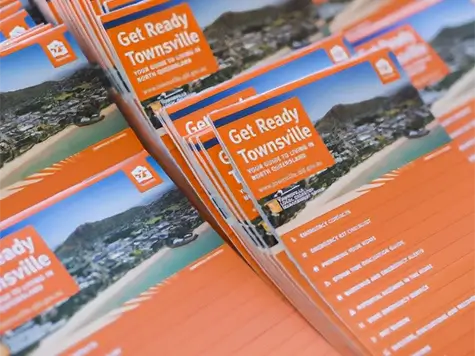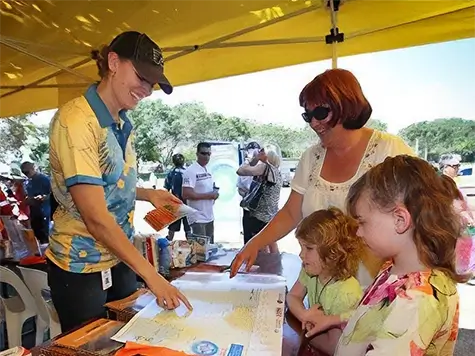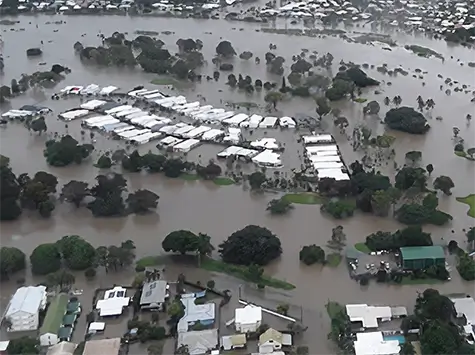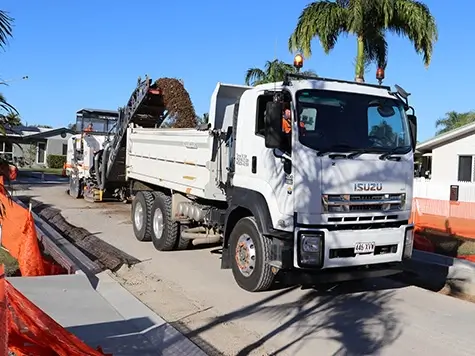
Council is encouraging residents to take photos as part of the Witness King Tides project. These photos will build a picture of the threat posed by sea level rises.
Background
Townsville is built on a natural floodplain of the Ross and Bohle Rivers.
For residents, this means living with the best and worst of our local climate. More than 300 days of sunshine each year can be tempered with our traditional wet season, which runs from November to March each year.
At this time, the city can receive an average of 1200mm, with the wettest months usually being January and February. It is not uncommon to get intense and heavy rainfall in a short period of time.
Flooding in Townsville is generally caused by heavy rain from a cyclone or rain depression crossing the coastline. This can sometimes result in local flooding to streets, yards and in extreme events, homes.
Which areas are likely to be affected by flooding?
In the event of a combination of heavy rain, strong winds and high tides, low-lying areas such as Railway Estate, Oonoonba, South Townsville, parts of Hermit Park, and beachside communities need to take extra precaution.
This means moving items to higher ground where possible. Avoid parking your car on the street, as saltwater can cause permanent damage.
Commonly asked questions about the wet season
What do homeowners need to do to prepare their property for tropical rain?
The best way to protect your home from the tropical rain is to clean out roof gutters to help prevent rain from flowing into your ceiling and causing extensive damage.
Remove any leaves from gutters and downpipes and trim back tree branches close to your roof.
 |
 |
 |
Be prepared for the wet season - clean out your gutters and downpipes, and trim any large or overhanging branches near your roof. Residents in low lying areas should stock up on sandbags in case of flooding. |
What should I look out for if I'm planning to renovate, buy or rent property?
Before buying or renting property, or carrying out renovations, residents should seek professional advice to ensure flood risks are fully considered.
In low lying areas of the city, some highset houses have been built in underneath with additional living space. Do your research to ensure these renovations have been approved by council.
Another area which can be particularly flood prone is under-roof carports which are sometimes 150mm below habitable floor levels.
Are new housing developments flood-proof?
No area of Townsville can be flood proof, however any infrastructure or housing subdivisions built after 1990 must comply with national design standards which require an ability to withstand a one in a 50 year flood event.
Townsville City Council has strengthened this requirement, by ensuring any concrete slabs laid for homes or buildings are at least 300mm above that level.
As part of the approval process, new developments are also required to prove they will have no detrimental impact on downstream flooding or upstream properties.
What will council do about water on roads?
During wet season, water may build up over low lying roads. However, it is important to note that roads built since the 1960's are designed to channel water away whenever flows exceed the capacity of the underground drainage system.
By helping to direct overland flows to local lakes, creeks and the marine environment, these roads act as the first line of protection for property.
This is standard practice where communities are built on natural flood plains, and in most instances, the flooding is short-lived.
Council will barricade roads if they are deemed by the police to be unsafe.
Problems with water in people's front yards and homes often stem from 'sight-seers' deliberately speeding through flooded roads.
top 
What impact will king tides have?
Low lying areas such as Railway Estate and South Townsville can be subject to king tides. |
King tides are a natural phenomena that result in lower lying sections of Townsville being inundated, namely around Railway Estate, South Townsville and parts of Hermit Park.
The biggest king tides usually take place in January and February, however if they coincide with heavy rain, water levels tend to be even higher than the predicted level.
If you live in a suburb prone to king tides, you should heed warnings and take precautionary action by moving items to higher ground where necessary. Avoid parking your car on the street.
Motorists should also exercise caution and avoid driving through saltwater on the roads wherever possible.
If you need sandbags, contact the SES on 132 500.
To prevent the entry of water under doors, you can also use plastic shopping bags or garbage bags partly filled with sand or soil. These will provide a good seal if packed tightly. |
How does the Ross River dam operate during flooding events?
|

The spillway gates of the Ross River Dam are opened once it goes beyond its storage capacity. |
One of the Townsville's biggest flood protection measures is the Ross River Dam which was upgraded in 2007. This helps to protect the city from large-scale flooding from the Ross River.
Under strict operational procedures set down by the Queensland Government's dam safety regulator, the flood gates are automatically triggered open once the dam has gone beyond its storage capacity.
Depending on the amount of water flowing into the dam, the gates are opened to varying levels that allow for the controlled and safe release of water.
This is designed to protect the integrity of the dam.
Under typical operating conditions, the operation of the Ross River Dam gates does not cause downstream flooding. |
top
What does council do to prepare for wet season?
Prior to wet season, and during heavy rainfalls, council crews conduct a big clean up of drains, culverts, inlet pits and grates across the city to ensure local flooding is minimised wherever possible.
Before king tide events, council crews also inspect and ensure the proper operation of all tidal valves and gates to assist in flood mitigation.
Capital works programs each year also allow for strengthening of roads through asphalting and insitu stabilisation to make them more resistant to water damage.
How soon will council carry out road repairs after heavy rainfall?
Potholes are a common sight on roads during a lengthy and intense wet season.
In order for repairs to be carried out successfully, the road pavement needs to dry out to a point where the asphalt can set.
During wet season, road crews focus on undertaking temporary repairs, before carrying out more lasting repairs when the weather has improved.
 |
 |
 |
A crew clears a drain in the middle of the wet season to ensure water can drain away adequately. |
Crews carry out temporary repairs of potholes throughout the wet season. More lasting repairs are carried out when the weather improves. |
Work is prioritised in the following order: arterial roads, collector streets, residential streets.
You can report a pothole through the council’s website or on 1300 878 001.
There are sewer overflows in my yard – what do I do?
Sewer overflows occur due to the extra pressure placed on the wastewater network from the large inflow of stormwater.
To report a sewer overflow, notify council on 1300 878 001. Crews will attend to affected properties as soon as possible, where they will control overflows and pump them back into the system.
They will also carry out a clean up of the area, through dilution and disinfection.
To find out more, click here.
What is council doing to reduce the impact of localised flooding?
Given that Townsville sits on a natural floodplain, it will be impossible to flood-proof the entire city.
However, Townsville City Council recognises there is work that can be done that includes identifying priority flood mitigation options in areas where flood water enters houses and businesses.
By examining which options deliver the most benefit for the community, the council will be better able to target its resources.
To assist with the development of flood mitigation strategies, council would like to be informed of properties affected by flooding. If your property is affected by flooding, please complete our online form.
Collection Notice
You are providing personal information by completing this form. View our collection notice and privacy statement.
Steps to follow in a flood
Who to contact
Visit the Emergency Contacts page on council's website.
Updates on the weather can be gained from the Bureau of Meteorology website.
top