
Household Embedded Batteries
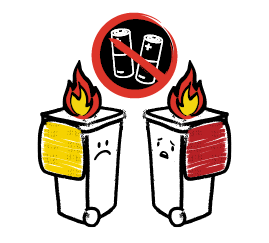
Lithium-ion batteries are found in most devices and can be more dangerous than traditional batteries. Incorrect battery disposal can result in injury, fire hazards and environmental harm.
They should never be disposed of in your household waste or recycling bins.
Whilst some can be easily removed and taken to existing collection points under the B-cycle scheme, others found in common household devices are embedded and cannot be easily removed.
Council together with the North Queensland Regional Organisation of Councils (NQROC) is running an extended collection program to help you safely dispose of these problematic and dangerous household items. There is no charge for disposal of accepted devices.
This project is an initiative of the Resource Recovery Working Group of the North Queensland Regional Organisation of Councils (NQROC).
NQROC is a partnership of five councils – Burdekin, Charters Towers, Hinchinbrook, Palm Island, and Townsville – working together to build a strong, sustainable North Queensland.
Residents can also drop off these items at the following Council's waste facilities:
Stuart Waste Facility
Stuart Waste Facility is a landfill and transfer station. This is our largest waste facility, it can accept most residential and commercial waste and reusable or recyclable resources.
Location
24 Vantassel Street, Stuart (map).
Opening Hours
- Monday to Sunday: 6:30am to 5:45pm.
- Closed to the public on Good Friday and Christmas Day.
- Regulated Waste accepted between 7:30am and 3:00pm. For large loads please contact Resource Recovery 13 48 10.
- The tip shop is currently closed indefinitely.
Items Accepted at Stuart Waste Facility
These items can be recycled at no charge for domestic customers:
- air conditioners
- car batteries (lead-acid batteries)
- clean cardboard and metals
- electronic waste (up to 20 pieces) 3
- fluorescent light tubes
- gas bottles (up to 9kg)
- green waste (lawn clippings, fern fronds, branches etc.)
- household batteries and vapes 4
- household recyclables (yellow bin) 6
- used motor oil (up to 20L)
- white goods.
Charges apply for general waste, solar panels, tyres, mattresses and asbestos 1.
Items Not Accepted at Stuart Waste Facility
Hervey Range Resource Recovery Centre
The Hervey Range Resource Recovery Centre can only accept small domestic and commercial loads as all waste must be able to fit inside compactor bins for transport to our landfill at Stuart Waste Facility.
Location
811 Hervey Range Road, Alice River (map).
Resource Recovery Opening Hours
- Monday to Sunday: 7am to 4:45pm.
- Closed to the public on Good Friday and Christmas Day.
Items Accepted at Hervey Range Resource Recovery Centre
These items can be recycled at no charge for domestic customers:
- air conditioners
- car batteries (lead-acid batteries)
- clean cardboard and metals
- electronic waste (up to 20 pieces) 3
- fluorescent light tubes
- gas bottles (up to 9kg)
- green waste
- household batteries and vapes 4
- household recyclables (yellow bin) 6
- paint (up to 100L) 5
- polystyrene
- used motor oil (up to 20L)
- white goods.
Charges apply for general waste, solar panels, tyres, and mattresses.
Items Not Accepted at Hervey Range Resource Recovery Centre
- asbestos 1
- asphalt
- chemical waste 2
- combination turf, tree roots and soil
- commercial and industrial (C&I) over 4.5t GVM
- concrete
- dead animals
- flares, explosives or combustible materials 2
- large loads or lengths of timber over 1m
- large or bulky items
- liquids and solvents 2
- mixed construction and demolition (C&D)
- pallets
- regulated waste.
Magnetic Island Transfer Station
Magnetic Island Transfer Station is a transfer station and tip shop. Most domestic and commercial waste and reusable or recyclable resources are accepted.
Location
65-73 West Point Road, Picnic Bay (map).
Opening Hours
- Monday, Wednesday, and Friday: 7am to 3:45pm
- Saturday and Sunday: 9am to 12noon
- Last vehicle through at 11:45am.
- Closed to the public on Tuesdays, Thursdays, Good Friday and Christmas Day.
Items Accepted at Magnetic Island Transfer Station
These items can be recycled at no charge for domestic customers:
- air conditioners and fluorescent light tubes
- car batteries (lead-acid batteries)
- clean metals
- gas bottles (up to 9kg)
- green waste
- electronic waste (up to 20 pieces) 3
- household recyclables (yellow bin) 6
- reusable items for the tip shop
- used motor oil (up to 20L)
- white goods.
Charges apply for general waste, tyres, and mattresses.
Items Not Accepted at Magnetic Island Transfer Station
Products accepted as part of the collection scheme:
Common items you might have at home that may contain an embedded battery are:
- Bluetooth speakers and headphones
- vapes
- electric toothbrushes
- e-scooters, e-bikes and hoverboards
- vacuum cleaners (cordless hand-held and robotic)
- personal care devices (e.g. shavers)
- flashing, light-up and audio toys (e.g. light-up wands, novelty toys with sound or lights)
- power packs and portable charging devices
- remote controlled and ride-on toys
- wearable devices such as smart watches, trackers and medical aids.
Do not try to remove the embedded battery from these devices if it is not able to be clicked out by hand. Using tools to remove the battery may cause damage and increase the risk of fire.
Products not accepted as part of the collection scheme:
Items not accepted or covered under other product stewardship schemes should be directed to Council's existing collection points.
These include:
- televisions, computers, printers, computer parts and peripherals collected via the National Television and Computer Recycling Scheme
- mobile phones and associated accessories collected via Mobile Muster collection points
- loose batteries up to 5kg collected under the B-cycle scheme
- oversized items greater than 20kg or of a bulky nature (requiring more than one person to lift)
- electric vehicle batteries
- household battery energy storage systems
- mobility scooters.
The Household Embedded Battery Collection is proudly funded through the Queensland Government's Local Government Battery Collection Program.
More Information
What bin? Ask Recycle Mate!
Download the Recycle Mate app to help figure out what goes where safely and correctly. It also includes handy bin night reminders, helping busy households recycle right and waste less every week.

Carols by Candlelight
Brought to you by Sun Metals, Townsville's favourite Christmas tradition returns to Riverway. Gather your family and friends, bring your picnic blankets and chairs, and enjoy a festive evening of entertainment under the big top tent.
Capital Works Program
To keep Townsville growing, Council is actively involved in the delivery of projects to provide vital infrastructure and exciting development opportunities.

It's Looking Like Christmas, Actually
Celebrate the festive season with Christmas Actually, a joyous live concert inspired by the beloved holiday classic. Featuring Naomi Price and a stellar cast of musicians, enjoy a heartwarming evening of Christmas hits, laughter and festive cheer.

City Activation & Housing Incentive Policy
The new City Activation and Housing Incentive Policy is designed to spark investment, activate development and bring fresh energy to our city and suburbs. Council is backing projects that increase housing, enhance our CBD and bring new ideas to life.