
You are here: Home Facilities & Recreation Libraries Programs & Activities Short Story Competition Short Story Competition 2017
Short Story Competition 2017
The theme for the Short Story Competition 2017 was "Food, Family and Fun".
Check out the winning entries below:
Mick and Maisie by Wendy Levy
“The trouble with grownups,” murmured Maisie.
“Mmmm,” Mick said vaguely, waving to a colleague by the Eco Fiesta plant stall from his spot in the queue for vegetarian kofta balls.
“The trouble with grownups,” Maisie repeated, then, warming to her theme, continued, “the trouble with grownups is that they won’t let you eat what you want.”
“Oh,” said Mick, focused now and ready for the onslaught. What would it be this time, he wondered, fairy floss for lunch or ice cream or … he scanned the stalls set up around Queen’s Park, following his daughter’s gaze to the pale blue van directly opposite selling bubble tea. The display did look strangely enticing and he knew Maisie was getting ready to set up a good wail about it.
“Have you actually tried bubble tea?” he asked. “It’s a nice name but it looks like it would be disappointing, like those Bubble-O Bill ice creams,” he ventured
Maisie was indignant. “But we like Bubble-O Bill,” she said, “me and Jack loves Bubble-O Bill, we think it’s the best ice cream in the whole wide world. Bubble O, Bubble O, Bubble O Bill. Bill Bubble, Bill Bubble, Bibble O Bubble!” she trumpeted.
Instantly Mick regretted mentioning the dreaded ice cream. He had forgotten how much Maisie liked the horrible Bubble O Bills with their sickly flavour and fake bubblegum nose. But perhaps he was being unfair. Years ago he used to enjoy a pink lemonade By-Jingo ice block on a hot day, loved ripping open the paper wrapping, feeling the texture of the wooden stick and getting ice crystals stuck to his tongue. That was his childhood favourite, growing up in Townsville.
His colleague was coming this way. “Nerida,” he called gaily, thinking this could be a way to distract Maisie from bubble treats. “You remember Nerida, don’t you Maisie?” he encouraged.
“Oh yes, hello Merida,” said Maisie brightly, lifting her satin cheek for the requisite adult smooch. “Merida, do you like bubble tea?” she asked innocently, turning on one of her sweeter smiles.
“It’s Nerida darling, with an ‘N’, like ‘N’ for … for …”, Nerida cast around wildly for inspiration suitable for a six-year-old. “It’s with an ‘N’ like ‘N’ for Nemo,” she blurted, plucking the name of the famous clownfish out of the air like some kind of magic trick.
“Nemo, we like Nemo,” said Maisie. She began to slide her hands around like a fish darting through the water. A successful diversion, thought Mick, smiling gratefully at Nerida.
“We’re queuing for kofta balls,” he explained, somewhat unnecessarily. “The Eco Fiesta’s not the Eco Fiesta unless you have kofta balls,” he added lamely.
“It’s a long wait,” said Nerida, looking at the 30 or so hungry people lined up ahead of them under the shady trees. She surveyed the stalls. “I don’t think there is as much food this year – what happened to that other Indian place? That gluten-free place isn’t much of a substitute,” she said, frowning at a van parked beside the bubble tea stall.
Mick knew better than to disagree. In the office, Nerida was never backward in putting forward her views and her campaign against gluten-free food for the otherwise-healthy was a favourite theme. “If the goddess had wanted us to be gluten free, why did she give us glutes,” she would say, erroneously flexing her bicep as some kind of incontrovertible proof. Mick had been known to enjoy the occasional gluten-free snack, sometimes buying gluten-free bread when he could get the brand he liked. He had even gone so far as to say that he felt lighter, less bloated, when eating gluten-free, but never in Nerida’s presence, as it would just start her off about marketing and advertising and brainwashing and why healthy people did NOT need to take vitamins or supplements.
Maisie was tugging on his arm, pointing at a group walking into the park. “Look Dad, it’s Jack and Jonah,” she squealed. The two boys went to Maisie’s school – Jack was in Maisie’s class – and lived near the house Maisie shared with her mum. “Can I go and say hello?”
Mick nodded, waving to the boys’ parents, miming eating and pointing at the food van. They would catch up later, for now, his goal was kofta balls and there was no way he was relinquishing his place in the queue. About 25 people ahead of him now, he assessed, but many would order multiple serves for family and friends, holding things up. Two teenagers walked past carrying steaming bowls of kofta balls drizzled with fragrant tomato sauce and his mouth watered. Mmm-mmm, he could almost taste the savoury cauliflower morsels. Beats finger-lickin-chickin anytime.
Nerida was talking to him. He tuned in, caught the end of her saying: “and then I said to her, okay, let’s give it a go.”
“Er, good for you,” Mick said, hoping he had struck the right note. “Um, what happened then?”
But Nerida had been distracted from her story by a woman waving to her from beside the spectacular grey-green Bizmarck palms. “There’s Jazz now,” she said. “I’ll be back in a minute – get me some balls if you get to the front of the queue,” she said, winking furiously.
It was an old joke, but a goodie, so Mick sniggered, and idly watched Nerida spirit away. She was nice, Nerida, he thought, and not bad looking either. She had that autumn leaf coloured hair, a bit frizzy like Nicole Kidman in her early films. Or maybe in that recent one, Lion, where she played an adoptive mum. If he got together with Nerida, she would be like an adoptive mum for Maisie, or maybe more like a stepmother, come to think of it. Whoa, where did that thought come from? Him and Nerida. She’d be a wicked stepmum, hey! She and Maisie got on well together, no problems there.
Maybe he should ask her out, he pondered. It had been an age since he had been on anything like a date, unless you could count that boozy night when Lainie was here from Broome. But no, he wouldn’t count that night, because they both laughed it off in the morning and said ‘what were we thinking’ and ‘we must have been out of our minds.’ So Lainie was out and anyway, Broome was too far away. He was staying in Townsville as long as Maisie was here. If her mum moved, it might be a different story, but she wouldn’t move, she was settled in her job and house and relationship and a new baby on the way to boot. Maisie would be staying in Townsville and so would he, and in any case, everything he needed was here and why would he want to go anywhere else?
So Nerida then. She wasn’t a bit like Maisie’s mum, the complete opposite really, except they were both doing well in their careers and didn’t take too much shit from anyone. Would it matter that he and Nerida worked together? he wondered. Well, don’t see why, we don’t report to each other, we’re in different teams and roles, water management and finance and never the twain shall meet, except down the pub after work on pay day. You have to meet your partner somewhere and why not the office, where you spend half your life? Come to think of it, he’d met Maisie’s mum through work, not actually at work, at the footy with some mutual work friends. That had been fine – for a while, anyway. They got on even better now they had called it quits.
He’d ask Nerida out. A movie maybe, or a coffee and the markets. Nothing too heavy, nothing that couldn’t be seen as just a friendly gesture if he got cold feet.
Maisie raced across the soft grass to him, laughing and breathless from a game of chasey with Jack and Jonah and their gang. “Hi Dad, this is fun, Dad,” she said, swirling around and then pelting crazily back into the fray. Mick moved up three in the queue, enjoying a bit more shade now. There were about 15 to go, he reckoned, well more really, as one was Sam Boag and he would order up big.
He looked at Maisie as she chased with the other kids around the spiky Bismarck palms, dodging a couple with a pram. They’ll have to slow down a bit with all these people around, he thought, and made to call to her, but Jack’s parents were onto it, grabbing the ringleaders and reminding them to take care. Maisie looked happy and healthy and he loved seeing her that way, her dark hair – same colour as his – waving out behind, escaping from the ponytail he’d brushed it into that morning. Saturdays and Sundays on ‘his’ weekends were the best, better than the Wednesday after-school rush when he finished work early so he could bring her to his place for the night. Then she was often worn out and sometimes a bit grumpy, whereas weekends were good for them both. Lazy starts with toasty eggy breakfasts, then out to The Strand or a park, the beach or Riverway pool, where they would float on their backs and tell each other stories about the clouds.
Maybe Nerida would like to come for a swim with them, he thought. Wonder what she looks like in her togs? Would she have a bikini, or one of those neck-to-knee sunsmart jobs that had single-handedly destroyed his summer viewing pleasure? Red Lycra or navy maybe. They would have ice creams and Maisie would insist on a Bubble-O-Bill.
With a flurry of gossip and wafts of sweet-smelling food, the queue lurched forward. That was Sam Boag getting his tucker, Mick noted, as the older man staggered past, laden with kofta balls and dishes of curry. God, I hope the balls don’t all get eaten, he thought suddenly, remembering a time several years back when he and Maisie’s mum had queued in vain under the trees with Maisie in her pram. It had not been good that day, he recalled, even before they ran out of kofta balls. Maisie was teething and her mum was tired and in a bad mood and he was no better, snapping at some friends of Maisie’s mum who came to goo at the baby. Maisie’s mum – why did he keep thinking of her as Maisie’s mum now? He should call her by her name, Amber. It was a pretty name, he had liked it when they first met, liked the sound of it and the image it brought of a cool, smooth, marmalade-coloured stone, autumn leaf colour even, like Nerida’s hair.
Again the patient line of would-be eaters straggled forward and Nerida reappeared beside Mick in the queue. “Only five to go,” she said happily. “You’re a trouper, Mick, standing here all this time.”
Mick was encouraged. Okay, he thought, so is now a good time to ask her out? Well, in for a penny, let’s give it a go, he decided. “Er, Nerida, would you …” he began, but Nerida was talking as well and their voices clashed like cymbals on the afternoon air.
They laughed. ”You first,” Mick said, doffing a pretend hat.
“So I’ve teed up next weekend to move in with Jazz. She wants to meet you and Maisie in a minute, I’ve told her all about you,” Nerida said, pointing at the group she had been talking with beside the palms. “Like I was saying, we’ve been together six months now and her housemate is moving to Sydney and we both thought, well, why not give it a go.”
Moving, Jazz, together, six months? Nerida’s words were spinning through Mick’s head faster than Maisie was racing around the palms with her mates. “Oh, great, really great news, Nerida,” Mick stammered, blushing furiously. Damn and blast it, why did he get these things so wrong.
“Yes, I’m taking my stuff over there on Sunday,” she said, “it’s in North Ward, not far from you actually. What were you going to say?”
On the spot now, Mick rifled through his brain for something innocuous. “Um, well I, well, I thought you might like to come over for a playdate with me and Maisie – Jazz too, of course,” he said quickly. “She always likes to see you and it will give us a chance to get to know Jazz. If you like, I can give you a hand with shifting – I’ve still got that old trailer,” he offered.
“That’d be great, Mick,” Nerida said. They arrived at the head of the queue and ordered kofta for four. With that sixth sense that kids have when food is ready, Maisie charged over as they stepped away from the van with their booty. “Yum, Dad,” she said, “that looks really really yummy,” and she reached into the bowl and took a kofta ball to pop into her mouth. “Be careful, they’re hot,” Mick warned.
“Why don’t I get some bubble tea to cool off?” said Nerida, as they moved over to the picnic table where Jazz sat with Jack and Jonah’s parents. Mick gave in. “Sounds good,” he said.
Mick found a space at the table and started testing the kofta balls, with and without the sauce, so he could get a real taste of the flavours. He cleaned up his bowl, then sipped at the bubble tea Nerida had placed in front of him. “Hey, this isn’t so bad,” he thought. “Sweet and cool on a hot day, I could get into this. Although a beer would be nice.”
Maisie scoffed her meal and was heading back to her game, when she remembered the bubble tea. She raced back for a swig, drew a long noisy draught through the straw, then spat it straight out. “It’s gusting,” she said, affronted, “ab-so-loody gusting. Why did you make me drink it Dad? I think I’m going to be sick.”
Mick sat Maisie down, gave her water to flush out her mouth and looked into her sparkly eyes. She did look flushed, all the running around, no doubt. “Have you had enough, my girl? Shall we see what’s happening at home?”
To his surprise, there were no arguments. They gathered their gear and farewelled the group, Nerida saying she’d be in touch about next weekend. Then with Maisie’s warm little paw snuggled in his, they strolled through the gardens to Paxton Street and headed home, Maisie starting to skip along the way.
“So did you like the Eco Fiesta,” he asked his daughter.
“Sure Dad, I loved it to the moon and back,” she smiled, then paused mid-skip and looked up at him. “But Dad, what I don’t understand is, what I really don‘t know is ... the trouble with grownups is …”
“Yes, my girl?” Mick enquired.
Maisie pouted. “The trouble with grownups is that they never know when you want a hug.”
Mick held out his arms.
Uncle Teddy by Jennifer Barrett
I love my teacher. My brother and the older boys call her a big, fat lezzo but I think she’s beautiful.
Her name is Miss Beaumont and every day she wears black lace-up shoes, a straight black skirt down to her calves and a white button-up blouse. She always teaches Grade Five and I’m trying to be kept down and stay with her forever.
When I told Mum that Jonno called Miss Beaumont fat she tutted and said she was just stout. When I asked if I was stout she squinted at me then pinched my belly with her witch’s fingers and said it was just puppy fat.
I don’t belong in this family. My mother calls Jonno Jack Spratt because he is tall and thin, lithe and brown, like her. Dad isn’t as thin as Mum and Jonno, but he’s not stout either. I am stout.
On the last day of school I am devastated. It was a balancing act to be stupid enough to stay in Grade Five but do well enough to please Miss Beaumont. I failed. I am going up to Grade Six. At the end of the day, after moping in the shadows while everyone else played tiggy and ate watermelon, I throw myself at Miss Beaumont and stick to her like a limpet, crying.
Miss Beaumont peels me off her wide hip, finds a bench to sit on and looks into my face. You’ll be fine, she says. If you just try a little harder, you’ll be fine.
But I love you, I sob, hiccupping my shame. Sweat sticks my fringe to my forehead. Miss Beaumont drags it out of my eyes with a forefinger and, holding my face in her hands, wipes the tears off my cheeks with her thumbs. Her breath smells of butterscotch and her fingers smell of chalk.
You’re a good boy, she says, you’ll be fine. She hugs me close. It’s like burrowing into a pair of cushions. I will never forget that moment. She lets me go, turns me around and pushes me towards the other children.
At least I will see her every day when I go back to school. If I can last six weeks away from her.
The Friday after Christmas we have a visitor. He arrives in a metallic green roar of Torana. Jonno and I stand agog on the front porch. Jonno licks his lips and lusts after the car. I am a bubble of curiosity because no-one we know has a car like that. The driver has mirror aviator glasses and sits and stares at Jonno and me. I scatter through the house. Mum, mum, I yell.
By the time I follow her back to the porch, trailing in the wake of her cigarette smoke, he is bouncing up the front steps in a flurry of flared jeans and pale blue paisley.
Debs, he shouts, his arms wide.
My mother blushes but tosses her half-smoked cigarette onto the front lawn and walks into his hug.
Do you remember Uncle Teddy? Mum asks when he puts her back on her feet. She straightens her skirt and strokes her throat.
Jonno and I both shake our heads. I can’t take my eyes off him. Jonno flicks looks between Uncle Teddy and the Torana. Uncle Teddy doesn’t look like Mum. He is shorter and rounder and Mum has straight hair unless she puts it in curlers.
It’s been a while, Uncle Teddy says as he pushes his glasses up into his mop of brassy curls. You, he looks at Jonno, would have been about this high. He waves his hand down near his knee. And you, he looks at me, were only about this big. He holds his hands about a ruler’s length apart. He bends down and grins into my face. But look at you, you’re a big boy now, he says. I twist away before he can poke me in the belly.
What are you doing here? Mum asks with her arms crossed, not inviting Uncle Teddy in.
Wedding, he says, tomorrow night. He reaches up, puts his arm around her shoulders and points her towards the front door. Was hoping to spend a night or two, catch up and stuff.
Mum sighs and opens the door. Alright, she says, but no more, I’ll have to make sweet with Darren so stay out of his way.
That night Uncle Teddy goes out. Buck’s night, he says to Mum with a wink. He isn’t there when Mum tells Dad. Dad turns the TV off. He never turns the TV off. He stares at the blank screen and asks Mum, What makes him think he can just bloody-well turn up here without warning?
Mum lights a cigarette and waves her hand at Jonno and me to get out of the room. We both hover in the kitchen to eavesdrop. I can’t remember the last time Jonno and I spent so much time together. Mum and Dad hiss tense, hushed words at each other. Dad turns the TV back on and turns the volume up. Mum comes into the kitchen and tells us to go to bed. We didn’t hear anything that solved the mystery of Uncle Teddy.
Uncle Teddy is still in bed when Dad starts the mower. Uncle Teddy slept in Jonno’s bed and Jonno slept in mine. I slept in the sleeping bag on the floor beside Jonno.
Dad spends a lot of time mowing the same strip of lawn outside Uncle Teddy’s window. Uncle Teddy is still in bed when Dad comes back inside, makes a sandwich and tells Mum he’s going to the bloody pub.
And tell that lazy sod he can’t spend all day in bed! Dad shouts as the screen door claps shut behind him.
Dad comes home early. It’s almost like he can’t stay away and wants to make sure Uncle Teddy is really here. Uncle Teddy is in the shower. Dad gets a beer from the fridge, flicks the top into the kitchen sink and sits at the kitchen table. He watches the bathroom door. Jonno sits beside him, leans back, fidgets with the salt shaker, and watches Dad. I sit in the lounge with the TV off and watch them both.
Eventually the shower stops running. I wait. I am terrified of what Dad will do but think it might reveal some Big Secret. We all wait. Uncle Teddy stays in the bathroom a long time. When he comes out he is wearing a green dressing gown and a pink shower cap. His towel is over his shoulder, his clothes folded over his arm. Dad takes a swig of beer. Jonno watches Dad. I watch Dad then Uncle Teddy then Dad then Uncle Teddy.
Hey Darren, Uncle Teddy says, thanks for letting me stay. Big night tonight but I’ll be out of your hair tomorrow.
Dad grunts. He takes another swig. He looks at Jonno. Leave the salt alone, he says, then stares out the window above the sink.
Uncle Teddy shrugs. He keeps walking and his dressing gown flaps open. His inner thigh is a slab of hairless flesh, smooth and white but dappled pink from the hot water of the shower. I blush. I don’t know why but I wonder if Miss Beaumont’s thigh looks like that.
Dad finishes his beer, leaves the empty bottle on the kitchen table and goes out to the shed. Jonno shrugs. He goes and rides his 10-speed up and down the street in front of the house. I sit in the kitchen and fidget with the salt shaker trying to look as nonchalant as Jonno did.
Uncle Teddy didn’t close the door to his bedroom properly. Under the shower cap his hair is in curlers. I watch him take them out one by one and flip them onto the bed.
Hey Debs, he opens the bedroom door wide and shouts. Can I use your mirror? It’s just that it’s bigger than the one in the bathroom and there’s none in here.
Mum has hidden in her room for most of the day. When she comes out she has circles under her eyes.
For Chrissake don’t let Darren see you in there. She shuffles into the kitchen and sits opposite me. Uncle Teddy sneaks past with a hairdryer and spiky round brush. Mum is furtive and chain smokes. She stabs and grinds each cigarette butt into the ashtray. She crosses her legs and bounces her foot, looks from the back door to her bedroom. The hairdryer whines like a jet engine.
Suddenly it stops. Mum stands up. She watches the back door. On his way past Uncle Teddy kisses Mum on the cheek. She keeps her arms crossed. The smell of hairspray trails after Uncle Teddy the way cigarette smoke trails after Mum. Dad doesn’t come inside. Mum looks down at her feet then puts the kettle on.
An hour later Dad is still in the shed. Mum decides we will have jaffles for tea. I help her cut up tomatoes and grate cheese. Jonno lies with his feet on the lounge and reads a Phantom comic.
I look up when Uncle Teddy opens his door and strides down the hallway. He is taller than he was before and the curls in his yellow hair sweep back from his forehead and bounce on his collar. He wears a purple crushed velvet suit with pants that flare over a pair of green and purple platform boots. His shirt is emerald green with ruffles down the front and at the cuffs. His smile is bright and broad.
Dad comes in through the back door the same time Uncle Teddy comes into the kitchen. Dad looks tired. Uncle Teddy looks amazing.
Dad shakes his head. For God’s sake take the makeup off, he says. He goes to the lounge, knocks Jonno’s feet of the seat and sits down. Uncle Teddy’s smile goes out like a blown light bulb.
Mum hugs Uncle Teddy. You should have known better, she says. Go and have a good time and I’ll see you in the morning. I hug Uncle Teddy too because I want to see him smile again.
He pulls my head to his chest. He smells nice. See ya later, kiddo, he says.
Uncle Teddy is gone when I get out of bed the next morning. Mum says he had to get back to the city. Dad says nothing.
On the first day back at school I find out that Miss Beaumont has been transferred. I am gutted. I spend all lunch hour in the toilets crying. The older boys call me a sissy. Jonno says nothing.
When I get home Mum isn’t there. Jonno slouches in front of the TV and won’t let me change the channel. I eat a bowl of cornflakes and linger in the kitchen. I’m sad and lonely. I go into Mum’s room and lie on her bed. The bedspread is quilted apricot and slippery under my fingers. It swishes when I slide off it. I sit in front of Mum’s mirror. Her hairbrush and comb are the colour of the bedspread. I try on her rings. They fit me because I have podgy fingers. I don’t want to have podgy fingers. I look at myself in the mirror. I remember Miss Beaumont touching my face. I hang my head and cry until the tears drop and splatter dark stars on my grey school shorts.
I don’t hear Mum come home. She finds me there. She puts an arm around my shoulders and I sob into her belly. Somehow she knows about Miss Beaumont. She strokes my hair.
It’s alright, she says. You’re a good boy, you’ll be fine, you’ll find another friend. She tugs a tissue out of the apricot-coloured box beside her ring stand and gives it to me. Blow your nose, she says. You look like something the cat dragged in.
She picks up her brush and brushes my fringe back from my forehead. I tip my face up. She smiles down at me. My fat fingers find a curler on the cut glass tray in the middle of her dresser. I hold it up to her. She frowns down at me. My shoulders drop. She goes to the door and shuts it.
Mum winds my straight, sandy hair around curler after curler. She pulls tight. I sigh. Her bony fingers smell like cigarettes and her breath smells like coffee. Tomorrow I will stop on the way home from school and buy her a box of butterscotch.
Fait Accompli by Lara Skerratt
The long car ride to my new school is finally over, and now nothing stands between me and a moment I have been dreading. I’m starting high school.
All I know about high school is what I’ve learnt from books: psychopathic bullies stuffing people’s heads down toilets, villainous teachers and students falling madly in love. It’s no wonder I’m petrified.
I make one last desperate dive into the car, but Mum isn’t having any of it. “Lara, you’re going to high school whether you like it or not!” she orders, halfway out of the driver’s door. There is nothing I can do but follow my belligerent mother to my ultimate demise.
Unfortunately, neither Mum nor I know the way to the hall, so by the time we wander in, the parade is well underway. I suggest running away, but Mum marches straight up to the principal. Nervous eyes turn towards my mother’s astonishingly bright orange ensemble and me. I was certain the day couldn’t get any worse.
My dear mother proceeds to ask the principal, in a voice that could be heard from Mars, where her darling daughter is supposed to be. I stare at the concrete floor, wishing with all my might that a hole would appear to swallow me up. No holes appear, and I am forced to look up at my audience of strangers. I desperately scan for a familiar face. There is no one.
Eventually, I am ushered into my first French class. I try to make myself as inconspicuous as possible, which isn’t at all like my usual self, but I suppose today had been anything but usual. My teacher has written the phrase ‘fait accompli’ (a done deal) up on the board, and asks us to put that phrase into context. I quickly raise my hand, ready with a witty response, and then it strikes me: at my old school I had been the joker, the class clown. Everyone had known and loved me. Here, I am no one; just another face in the crowd. My hand falters, but then I determinedly raise it up high in the air. It is time to show everyone exactly who I am. “So if I put ‘a done deal’ into context do I get an icy pole?” I ask innocently.
“Oui” replies my teacher.
“Fait accompli!” I answer.
Family Flame by Erin Chin
The young child peeked curiously around the corner of the kitchen, watching raw flavour be tossed into an inferno of spitting oil and hissing steam. His father’s brow was furrowed in concentration as he threw in peeled cloves of garlic, the chopped slices exploding into the wok with a burst of fiery fragrance. Without even realising it, Li had come out of the shadows and into the warm kitchen light where his father danced around illuminated in his culinary spotlight. Eyes widened in awe, Li watched his father toss in onions and shallots before masterfully flipping them in the flaming vessel. The small pieces flew through the air before landing back in with a satisfying crackle, the happy sizzle of his soon to be dinner.
His father was too busy cutting coriander to notice his presence, so Li tried to look over the stove, his little feet dangling centimetres off the ground as he tried to pull himself over the bench with his stick-like arms. Not able to defy gravity for long, his feet reluctantly returned to the ground and Li knew he had to get inventive if he wanted to solve this problem. Dashing from the kitchen he promptly returned with a plastic step from the laundry room, the rubber feet scuffed from frequent use.
Placing it down next to the stove he peered over the top burner triumphantly. A wave of aroma slammed him in the face and his eyes slightly watered from the heat and frying onions. He gazed up to his father who had his long black ponytail tied back in his usual red elastic that he used when working at the noodle hut down the road. His name tag was scrawled with a sharpie that spelt ‘Yao’ so customers knew who he was, His name rarely ever being used by the intended party. He loved it when his father cooked, but for some reason, the food always tasted better when his father made it out of the shop.
Yao broke his gaze away from the wok to peer down at his son, who watched fascinated as he stirred in each ingredient. He smiled gently and ruffled Li’s hair, causing the young boy of five to peer up back at him with the same brown orbs. He leant down and whispered in his ear, watching a gleeful smile creep across the child’s face. “That’s my Li” he thought, before turning back to finish the dish in soft silence.
The boy of twelve glanced at his father as he chopped shallots for Yao to use. Age was starting to show in some of his father’s features, but Li knew there were some things that even age couldn’t take away. His father still moved gracefully as he had always done. The dancer of the kitchen, the culinary puppet master who weaved magic with cuisine theatrics. How could Li ever make a man like this proud? Turning away from the sight of his fathers turned back, he cursed himself for being so stupid as to mess up the entrance exams for that culinary school. His father had worked double shifts for him to be able to even take the exam across the country, only to end up with the worst score out of twenty. His father had whispered something to him and consoled him of the loss, but it still wasn’t enough. Li could see the slight heartbreak in his father’s eyes when he crouched to wipe away the tears, and the loose way he held Li’s hand to walk him out of the exam room. Even though his father would never admit it, Li could tell that he was disappointed that he couldn’t bring his cooking to the world, to make it past the small noddle restaurant down the road. Distracted, his blade slipped and a sneering red line formed on his finger, forming crimson droplets as if they were the tears of his failure. Yao whirled round instantly, inspecting his sons finger as Li glared at the knife. Feeling a heavy hand pat him on the back reassuringly, His father turned back to the wok. Angered with himself Li continued to work, the dull chop of the knife igniting him with wild, golden fire. He was going to that school, no matter how many times he’d fail.
Li stood in the busy kitchen avoiding people left and right as he cut the shallots at a rapid pace, the knife whizzing dangerously past the thin scar line on his index finger. The dull chatter of customers wafted in through the door like music, encouraging his staff to work even harder than before. Lighting the fire under the wok, he heated up oil and proceeded to flip shallots and other vibrant ingredients through the air, dancing around the kitchen as if he was on ice. Now twenty-one, Li had bargained and negotiated to get his restaurant open as soon as possible, and on this, his grand opening day, he was inundated with hungry patrons.
He plated the dish and garnished it, flooding himself with childhood memories as he inhaled the aroma of pan-made magic. Before the server could take it away he stopped him. “Do you mind if I take it instead?” Li asked, picking up the plate and walking by. The waiter gave him a quizzical look but nodded obligingly.
His father was seated at the closest table, his greying hair held back in a worn red elastic and his brown eyes smiling as he placed the dish in front of him. “Chow Mein?” his father asked, ruffling Li’s black hair under the chef’s cap. “Chefs special,” Li smiled. “It’s my favourite.”
His father laughed and took a bite, lighting up as if the golden kitchen fire lit inside him once again. “You’ve been listening to what I’ve had to say hmn?”
“Of course. After all, all good food comes from family”
Tree of Life by Huon Evans
“Can’t we just buy the meat instead of doing it ourselves? ”, I asked for the millionth time.
“I already told you. We don’t have the money”, replied dad.
“Now go get a cow,” he orders. I trudge off to the paddock to go and get this week’s dinner.
We’ve lived on this 50-acre cattle farm on the outskirts of Townsville for as long as I can remember with little money to live off, just Mum, Dad and I. In the evenings, the sun sets over Hervey Range and dad sits on the porch reading the newspaper while mum lies in bed. She is sick and getting sicker. I like it here, although sometimes I wish we lived somewhere easier for mum.
In the morning the air is cool and the ground is damp with dew. Trudging out to the paddock, I see the cattle meandering around the tree line. As I get closer, I can see part of something wooden sticking out from the ground that the cows have uncovered. I’ll check it out tomorrow I think, as I grab a fat-looking heifer.
I can hear birds singing as the sun peeks over the horizon, filtering shards of gentle warm light into my room. After breakfast, I grab a shovel and run out into the paddock, locating the small, box-like object from the day before. I dig for the whole morning.
By lunch I’d uncovered half of the box. It is plain but has an air of mystery to it. As the sun skulks away like a wombat to its burrow, I finally drag it out. I can hardly contain myself as I jog back to the house, eager to show it to dad.
“Look at this Dad-,” I begin.
“I’m afraid I’ve got some bad news,” he interrupts. “Mums gone to the hospital. She has cancer.”
I’m speechless. I fling open the lid, trying to find something else to do, to stop the tears and take my mind off the news. A seed. Just a bland, smooth seed about the size of a 10 cent coin, sitting in the middle of this box that took so much effort to get. In anger, I get up and throw it out the nearby kitchen window.
I wake up from a troubled sleep the next morning. Shuffling into the kitchen, I see something unusual outside the window.
A single gold-tinged, apple-like fruit has grown at the top of a plant overnight where the seed had landed.
Later at the hospital I give the fruit to mum.
“Thank you dear”, she says as she weakly accepts my meagre gift.
A week later mum has been discharged from hospital after a miraculous recovery. The doctors were baffled and could find no trace of the cancer.
They never explained mum’s full recovery and driving mum home to the farm, I notice the small tree has died and shrivelled up, only ever producing one of its golden apple-like fruits.
Hunter and Prey by Layla Horsington
The moon light cast shadows on the darkened zoo. The zookeeper was almost ready to turn out the last light, ready to go home to his family. The silence was broken by the occasional growling and hissing of the animals. Destiny waited impatiently at the door of her enclosure. She could see the last light in the keeper’s office. “Just a little longer.” She growled to herself in a deep velvety voice. Finally, the light went off and the leopard quietly pushed against the bars of her loose door with all her might. Harder and harder she pushed until the door finally gave way.
Destiny shot off into the darkness, pausing at the zoo’s gate. She smiled to herself, flexed her muscles and jumped. She padded silently through the streets, unseen as she stealthily weaved her way through the town. She turned corners, made her to way to the outskirts and into the African Savannah. Destiny slept in a towering tree. The rumbling of her stomach awoke her. She felt ravenous. She had not known hunger like this since her escape. Her wide violet eyes scanned the savannah’s horizon, she sniffed, looking for any signs of food. Destiny’s sharp gaze fell upon a young gazelle that had wandered from its herd.
She crept across the stringy wheaten grass, shielded by bushes and small trees. When she got close enough, she pounced on the unfortunate gazelle. The doomed animal struggled desperately against the hungry leopard. Destiny slashed at the gazelle with her razor-sharp claws, and once it was dead, devoured the meat. Her thirst was becoming overwhelming, so she searched for water. She made her way to a nearby lake and drank. Destiny saw her reflection in the water and splashed at it. She was having so much fun being free!
Suddenly a horn blasted and a single archer emerged from the underbrush. “One?” Destiny said scornfully to herself. She was sure that she could handle this. On command from the first archer, ten others sprang from their hiding place in the bushes. Destiny glanced at their sharpened obsidian arrows. Just then, she received some unexpected help from the thick branches above. A muscular male leopard leapt towards the ground. Before the leading archer could signal to shoot the leopard sprang effortlessly onto him. The weight of the big cat made him crumple to his knees, crying out in pain. Despite this, several archers released their arrows and one plunged into his hide, wounding him. Destiny’s feline instincts told her to attack. Roaring loudly, she wildly slashed at them. Dropping their weapons, they fled in fear.
Panting heavily, with their hearts racing, the leopards watched them flee. Destiny and the majestic young leopard sprang up to the wide branches above them to rest. As dawn was breaking, the male leopard told Destiny his name was Fang. They bonded for life and their first litter had three fierce cubs. Destiny finally had a family. She was content.
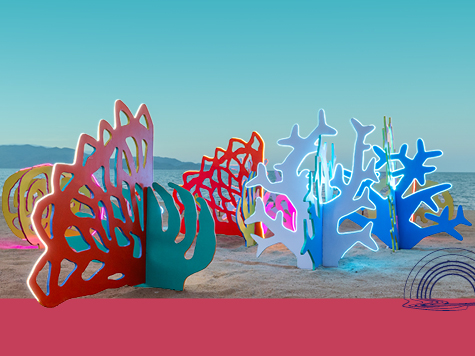
Entries are now open for Strand Ephemera 2027
Artists are invited to submit concepts that will form the North’s premier pop-up public art festival. Spark imagination and wonder, with artworks that celebrate Queensland’s unique stories – creating connection and lasting inspiration. Entries close: 10am, Tuesday 3 November 2026.

Community Sentiment Survey
Council’s Community Sentiment Survey is a city-wide survey that gives community members the opportunity to tell Council what is working well, what needs improvement and what matters most to them. The survey closes 30 October 2026.

They Will Be Kings
Uniting some of Australia’s most exciting & influential trans activists, drag king performers and award-winning artists to rewrite the queer history of 21st Century Australia. Join the revolution. Celebrate the Kings.
Recovery Roadshow
Council is taking recovery support on the road, with a series of community events planned across some of our region’s more remote communities. Connected communities recover better - let’s do it together.
Capital Works Program
To keep Townsville growing, Council is actively involved in the delivery of projects to provide vital infrastructure and exciting development opportunities.