
You are here: Home Facilities & Recreation Libraries Programs & Activities Short Story Competition Short Story Competition 2019
Short Story Competition 2019
The theme for the Short Story Competition 2019 was "Be Brave, Be Bold and Be Brilliant".
Check out the winning entries below:
The Girl in the Mango Tree by Suzy Gilmour
The mango tree stood by the lake, and the lake lay in the garden of the bungalow. The lake was a pond really, but it seemed vast when we first saw it, which was the day we moved in, the day you could say this story begins. Diggory, having gone down to inspect it, had had seen a fluttering of white in the tree, which he took at first to be a butterfly, because he was woefully short-sighted.
Being of a poetic turn of mind Diggory called up into the green cloud. ‘Butterfly, butterfly’. And that was when Louisa dropped from the mango tree into our lives, thin, termagant, and clad, then and always, in white somewhat stained with green from lying in wet grass and shinning up trees. A blue sash round her waist was tied in a big bow at the back, and she stood with her hands on her waist and her arms akimbo and said, ‘The mango tree belongs to me. The lake belongs to me.’ And she looked at Diggory with fierce red-brown eyes that made him understand somehow that this was not up for debate.
And so instead - for he was born a diplomat - Diggory said. ‘Can we play in them too?’ The red-brown eyes didn't become kind, but they became speculative. And that was Louisa: a demon in dirty dresses, a user and - alas - an enchantress. Certainly Diggory was enchanted. She showed him the handholds that took them high in the mango tree - and mangoes are not the easiest trees to climb. She showed him the sandbar that made a sort of path through the lake, so that even in the rainy season you could - pretty much safely - wade from one side to the other. And she showed him where to get over the fence into the tea plantation her father owned, where he left his daughter (indulged, spoilt, lonely - I see that now) to the care of an amah, who was as much a mother to her as a servant, though maybe not a good one.
Rumour had it the amah might have been her real mother, but rumour ran ripe riot in those little British enclaves, making our mother shake her head, purse her lips, and say a gossip’s mouth was the devil’s postbag. In fact, we knew her amah was really just that, for we’d had it from the Butterfly’s mouth that her real mother was an Indian Ranee, who, as a beauteous - always beauteous - girl, barely seventeen, though occasionally eighteen, had fallen in love with dashing Captain O’Hare, and died giving birth to Louisa. Her last words entrusted her child to her lover, insisting she be brought up as a Princess. And he, in tears, promised. How could he not?
To all of us - except Edwina - it seemed a good enough explanation for how she was. ‘But,’ asked Edwina, ‘if you’re a Princess, why don’t you have lots of servants and palaces?’ The Butterfly retorted sharply enough that she had had something better than dull servants and draughty palaces: she’d had a pure-bred Arab stallion named Rhadamanthine. Together she and Rhadamanthine had ridden like the wind over hill and valley, dashed through jungles and forded mountain torrents, out-stripping the handsome body-guard hired to look after her. But then, one day, galloping at full stretch through the forest, her bold and beauteous - oh, that word again - Rhadamanthine had been blinded by a shaft of light and run straight into a tree at full tilt and died beneath her. Or possibly she had drawn her pistol and had to shoot him to put him out of his pain. And indeed Louisa herself had broken a leg and lain there in fearful pain, but without crying out, until the bodyguard found her.
‘But.’ asked Edwina, ‘wouldn't he have found you sooner if you HAD cried out?’
‘Yes, stupid,’ said the Butterfly. ‘But not before a brigand.’
Edwina's eyes were wide and blue.
‘Are there brigands in the jungle?’
‘Of course there are. I was captured by them. But after one of them crept up on me and would have slit my throat if I hadn’t lashed out with my foot and broken his arm, they soon realised I was not someone you could murder and get away with it.’
And of course she had stayed with the brigands in their cave, to which she made several improvements involving carpets and plumbing. Indeed she had become their adored and feared leader, and had personally master-minded the theft of old Ma Bagnold’s emeralds when she was staying at Government House. ‘But people were killed in that robbery!’ exclaimed Edwina. ‘A porter was killed. And some of the family’s dogs.’ Edwina put her arm round the neck of Impy, her favourite mutt.
I remember the strange look on the Butterfly’s face. Looking back, I can see she was weighing up the odds. Either she had had to kill that dog herself to ensure the success - no - the very survival of her men. Or people had lied: the porter and the dog were shot in cold blood by the Governor himself, but he had subsequently blamed her brigand band of the crime.
‘Heaping opprobrium,’ said Diggory, for he was a bookish boy, ‘on the natives.’ ‘But wasn’t it her rubies’ asked Edwina thoughtfully, ‘that Lady Bagnold lost?’
What stopped us telling Mother? Of the Butterfly’s remarkable escapades? Her bravery? Of how she was loved by everyone?
‘It's so sad,’ said Joyce. ‘She has lost so much. The robber band. Rhadamanthine. The older half-brother who died saving her from the tiger. The imperial diadem her mother sewed into the frock she gave her baby as she died.‘
‘They had to sell that to pay off her father’s gambling debts,’ said Diggory, ‘or the entire plantation would have been sold out from under them.’
‘Sold out from under them,’ repeated Joyce with relish. ‘How terrible.’
Was it half overhearing some of that childish chatter that made my father (a bank manager and a man of marked discretion) say what he did in our hearing? ‘Of course, O’Hare’s just the assistant to the manager of the estate, not the owner. Decent chap,’ he told mother. ‘Straight as a die. Shame he’s going to Haphlong. The wife’s up there of course. For her health.’ Then, in a lower voice, not meant for the children, but reaching our sharp ears anyhow: ‘TB. Near the end, poor thing.’
‘What about Louisa?’ My mother’s head was bent over a letter from ‘home’, a place even Diggory could barely remember.
‘The child?’ Our father shrugged. ‘Boarding school, I imagine.’
And quite suddenly, the Butterfly was gone. We never saw her again. Nor even heard of her again, though she’d spoilt Diggory - glasses or no glasses - for nice, dull, respectable women for the best part of twenty years.
But wherever she went she will, I know now, have rescued us all from drowning in the lake-that-was-really-a-pond, resuscitated us after we fell from the tree to split our heads like ripe mangoes, swum out to drag us from the sucking slough of the sandbar, and sold her last jewels to ransom us from kidnappers.
It is not a bad legacy.
Arm’s Reach by Courtney Thomson
When the sun finishes playing hide-and-seek with the moon, the early night air is like the oven ten minutes after Mum turns it off. Out here, the sweet spot is around 1:30am; at this time, the night forgets it was ever day. This is the only time you’d feel a chill. I know this because I stayed up the whole night to test it. I know this because my mum said I have trouble switching off, that’s why I can’t sleep.
My bedroom is the only one that doesn’t face forward. My room is pushed to the back. Like me. Mum and Dad’s room is ten long lunges from my door.
Sometimes when I can’t sleep I like to pretend there’s a fire or the sky is starting to crack. Sort of like the drills we do at school where we hide under our desks, I test how long it would take to get to Mum’s room. I count to five on my fingers and run out of bed. The finish line is their bedroom door. The counting only stops when both hands are stamped against the wood. Softly, though, because I can’t wake them.
I learned my lesson the last time I did the test in full. I ran through their bedroom door, and catapulted myself onto their mattress. Dad was so mad that he belted me with the metal buckle end. Now I have a scar on my arm that looks like puckering lips.
My record is ten seconds, but tonight I’m gonna try for eight. I’ve got it worked out. Turning back the sheets and rolling out of bed wastes time. Tonight, I’m gonna stand and jump.
I start the countdown.
One
Two
Three
Fo-
I stop.
The colour red streams through my window, staining the walls, my white bedsheet. I stand up on the mattress and spin. Everything red, reminding me of the stain-glass windows I made at school—for each cut-out I stapled on a different colour cellophane. Yellow, blue, red. When you hold it up to your eyes, all you see is that colour.
Like soap and water in the sink, the colour drains from my room. I kneel at the window, bundling my knees together and look out. I strain my eyes but I can only see as far as the clothesline, the back fence.
There is something about me that doesn’t want to be still. Mum says I’m always ending up in places I shouldn’t. I can’t help it, I like seeing things when you’re not supposed too—like being at school at night-time. Everything should the same but it isn’t.
My window doesn’t have a flyscreen so there’s nothing to stop me from getting out…nothing to stop anything from getting in. I guess, out here, we think no one will get us. Dad said we never used to lock our doors at all. Not until a little while ago. Not since all the strangers started moving here.
I feel for my joggers under my bed and put them on without socks.
Soft and slow, I push the window out further. It creaks painfully, and I wince. My house used belong to my Grandma before she died, so sometimes I like to think the night noises are just her talking to me—warning me off going outside.
‘I’m sorry, Grammy.’
I sit in the frame and lower myself down onto the cement.
I land near Mum’s clothes trolley, accidentally kicking the peg basket free from its holder. I manage to catch it before it clangs on the ground. A few pegs escape from the top, but I think I’m safe. Phew.
I watch several cockroaches scurry into their hiding places as I tiptoe to the fence.
A bowls’ club sits across the way from us. The light over the bowling green is always on, so that means our backyard is never fully dark. I’m glad for that. I hate the full dark.
I lace my feet into the fence’s chicken-wire diamonds and climb, stopping in the middle so I can hold onto the rail.
Out there is a field that lies sandwiched between my house and another. It sits there empty, untouched. If I was on the ground, the grass would brush my thigh.
At night, the green looks different though. It reminds me of the stretchmarks that snake above mum’s pants when she reaches up: once alive-looking but now white and forever colourless.
I asked Dad why the field isn’t green and he said there was no point tending to it, it’s all dead.
‘How does grass die?’ I said.
‘Dunno. Guess someone forgets to look after it.’
I think about that a lot—tending to what’s dead. Sometimes, I think nothing ever dies you just forget.
I know the field isn’t mine, but it belongs to me.
I stare out until my mind is blank; I forget about the red.
My left hand lets go of the rail and my fingers pinch my earlobe. Mum said it’s a comfort thing I do. I’ll probably grow out of it.
My eyes become kites and drift past the field and wedge themselves between the wooden slacks bolted into windows of that place. I’m scared to go there. It’s been empty for so long now that I don’t know how anybody could ever live there again. I imagine a rod winding back my eyes, but there’s a knot in my vision that snags on something in the field. At the far end. Moving.
The air is still so I know it’s not wind pressing the grass down. But still I’m not sure. My eyes have lied before. Swaying like a zig-zag, I swear the grass is bowing, no, flattening like an iron over a creased shirt.
Like sticking your head in the freezer, a sudden coolness hits me.
The grass is forming a path, made for me.
Reach me.
Reach me.
I climb over and follow without thinking about the prickles, about the snakes inside the grass.
The ground is bare where I walk.
Go straight ahead.
I look back and find I’m already half swallowed by the field; my open window a dimple in the distance. Turning back, I watch the grass ahead move quick like a thumb flipping through a deck of cards. Legs and arms, bounding, but away.
There’s no fence between the field and that house, but the grass pauses. I plant myself where it ends, afraid to cross this line.
My heart bolts when I see them.
They are standing like an animal, but they’re a person. I know this because their skin is so white that it almost reflects, like light on water.
A gasp slips out, making their head snap up.
I can see their face and they’re a girl. She looks kinda like me.
I don’t do nothing but watch as her head tips from side to side, her nose sniffing. I breathe in too, but all I can smell is red dirt.
Her hands are curled like paws. She puts one forward and beats the ground, and draws up the other. Her legs sweep forward with her arms, like one-two. I hear a low rattling sound. She’s growling at me.
I step forward. I want her to know I’m not a threat.
Her body tilts to the side, cautious.
I crouch down to match her height, and reach out my arm to her.
She sniffs the air again before leaping towards me.
My arm wobbles, as I listen to her hands, her feet pounding the ground like hearing hooves. An ‘ah’ sound escapes from her as she moves, and for a moment I see inside her mouth. A black hole with teeth.
She is seconds away from me now, I feel the warmth from her body rushing towards me. There is something balled inside her paw, something with an jagged end that sprouts out from her fingers. I can’t move now, there’s nowhere to go. She’s here.
I close my eyes tight, seeing veins and pink. Until she is right here. I see her dark outline sketched against my eyelids.
I feel a tightness around my arm and a something leather feeling. Grabbing and tight. Then nothing. The sound of feet and hands loud at first, then fading, now everything is quiet.
I open my eyes an little at a time, expecting ooze and blood. I hold my arm up to reach the yellow light. No cut, no wound.
There’s a red ribbon tied around my arm, covering my scar.
The Sound of Memory by Emily Price
The boiling water immediately turns a deep tan colour as it makes contact with the teabag. Hand shaking with exertion, he places the kettle onto the blue Formica benchtop. As he pulls up and down on the red tab of his English Breakfast, clouds of tannin turn the liquid to a dark almond colour. Finally satisfied, he dumps the teabag on the edge of the sink, to be reused at a later date. Ever so carefully. He carries the chipped, well-used Cowboys mug to the kitchen table. The shaking of his hand that he tries so hard to control threatens to spill his cuppa. He never fills it all the way to the top anymore, it’s too risky. Lowering himself down into the chair with a crack of his arthritic knees, he waits for it to cool enough to take a first sip. Slowly, he brings the cup up and gives the tea a gentle blow before lowering his lips to the navy rim.
The noise comes out of nowhere. The whirring of helicopter blades and the roar of a Chinook’s engine seem to cover the tiny house like a heavy duvet. The rumbling infiltrates his mind until he can hear nothing else. It sends aggressive shivers down his arm in an uncontrollable reaction. The violent smash of his favourite mug and burning sensation of hot liquid soaking into his clothing barely register. He is somewhere else, in a world where fear and instinct overtake him. It is not the machines overhead that scare him, this is a paranoia brought back to life by the rhythmic wop-wop of the rotor.
His hand covers one ear as he squeezes his eyes shut and drops on shaky legs to the floor. Shards of china draw droplets of blood as he scrambles beneath the table and curls into the foetal position. Beneath the wooden table, no matter how hard he tries to resist, jungle and darkness surround him. He cannot escape the yelling, helicopters and gunshots that resound in his mind, despite his ears being covered tightly by his arm and shoulder. The images are just flashes, like slides being put through a projector, but they force him into a cold sweat. The heavy, laboured sound of his own breathing reminds him of combat training. Like a child having a nightmare, he finds it impossible to stop the memories. His body convulsing, tears streaming down his face, he tries to change the inevitable ending of the past. But just like a dream, he is powerless to change what he sees. They keep playing, a film that rolls round and round the projector.
Before him he sees it, the image that haunts him at night and wracks his heart with unassailable guilt. 347 dead lie strewn across a field. He remembers the number and the list of names. They were the enemy, but people all the same. He was meant to be the good guy, but he struggles to believe that. He never looked at his mates in the same way after seeing what they could do, and has never forgiven himself for what he did not do to stop it. In the vision, the colour saturates his lenses, making the destruction seem unfathomably worse than in the black and white pictures sent home. He sees the blood spilling, bright and viscous, from bodies. Human features, once loved by families, are now unrecognisable. What he has seen in Mỹ Lai he cannot unsee. The faces of children, their dark hair contrasting against vermillion blood. The faces of women, their slender bodies torn to pieces. The medal he was given all those years later brought no salvation. Even now, the memories leave him gasping for air, wiping sweat from his brow and tears from his eyes. How much longer can he live with this guilt of his?
He must alleviate the pressure of his racing heart and rushing blood. Gripping the chair with his hand to pull himself to standing he then shuffles, almost stumbling, toward the old oak upright. He lifts the creaking lid and pulls out an old stool with wonky legs and a frayed cushion. The piano reminds him of himself; old. He has discovered that five fingers don’t make quite the same sound as ten, but nevertheless he lays his arthritic fingers on the stained ivories. The flowing melodies he draws from the instrument are as beautiful as they are simple. Gradually his breathing slows to the tempo of the tune and his hand loses its constant shaking. The notes resonate around the small kitchen and living area, filling him with very different memories and emotions. There is no need to cover his ears this time. This is the sound of healing.
Many a time he has thought of ending it all as a way to escape his guilt, but he cannot. He would be a coward. He must face the day and soldier on. After that day, he vowed to use every day for good as a way of penitence. This is him, proving that something beautiful can come out of destruction. Bravery is more than choosing not to partake in something heinous. It is making the conscious decision to do something worthy instead. Getting up each day to face his demons instead of succumbing to them takes bravery. Turning those demons into something to be proud of takes bravery. The sound of the helicopters has finally disappeared, yet his hand continues to dance on the keys. He has moved on from his past. He is living in the present.
A Midsummer Night’s Dread by Mikayla Dickinson
I tore down the desolate highway. An infinite expanse of inky darkness sprawled out above me, peppering my decrepit ute with relentless sheets of rain. The obscured, icy, evening sun hovered somewhere above the mottled horizon, yielding just enough light to cast a shadow of illumination over the endless greenery around me.
A weary sigh escaped my lips like a wounded creature exhaling its final breath. I glanced to my left, twinging with heartache as I grimaced at the empty seat beside me. Mesmerised by the emotions coursing through me, my thoughts became entangled with those of the past hour.
Brutal gales wrenched panel upon panel of rusted corrugated sheeting from my cousin’s roof. The dilapidated structure succumbed to the merciless storm’s wrath with barely a struggle. Any chance of continuing the renovations on my cousin’s crumbling cattle property scarpered out the window upon hearing of our cyclonic plight.
My soles squeaked with discontent on the rain-soaked grass as my cousin shepherded me towards the car. Ceaseless objections erupted from within me regarding his foolishness in choosing to remain with his home as it was assailed. Hurling tools and belongings of mine into the rear of the cabin with haste, my cousin slammed the door, trapping himself outside. The shouts of disapproval spilling from my lips were unending, but each protest fell on deaf ears as he sprinted back towards his collapsing home, disappearing through the doorframe.
Half an hour later, the gentle hum of the car’s six-cylinder engine was unceremoniously interrupted by a resounding crack as brilliant arcs of lightning ignited the sky, yanking me back to the present. Moments before being plunged back into semidarkness, I spied a minute form in the distance heading away from the city. The shape was a car racing towards me, its fog lights fruitlessly striking the impenetrable deluge. As it neared, the unmistakable cacophony of unrestrained tools rattling in the stranger’s ute tray was audible above the rain’s din.
Easing off the accelerator, I flicked the warm lights that illuminated the bitumen before me. The window of the stranger’s car lowered as it halted, revealing a man a few years shy of his mid-forties. He sported a flannel shirt, the sleeve of which darkened as rain pelted its exposed fabric. A well-groomed cattle dog stood sentry in the passenger seat.
Freezing liquid daggers stabbed my face. “Storm’s getting worse!” I bellowed over the raging weather. The stranger gazed upwards.
“You’d be better off bunkering down in the city!” I yelled. A quizzical look spread across his face at my apparently unfounded concern.
“I’ll be ‘right. My home’s a tough nut to crack,” the stranger grinned. “I’m across the creek from young Delaney. Good lad.”
“He’s my cousin,” I said. The stranger nodded. “His house — it’s gone,” I croaked. “If yours is still standing, I doubt it will for much longer.” The stranger looked at me; his expression hardened. I squirmed under the older man’s emasculating stare. Perhaps two decades my senior, he oozed rural experience and authority I didn’t have.
“I know what I’m doing, kid,” he spat. Teeming with ire, he motored off.
As I sped home towards the city, a nagging feeling tugged at my gut. The once pathetic creek bordering my cousin’s property had been transformed into a ruthless torrent of murky sludge by the gloomy skies raining hell upon the face of the Earth. Any possibility of employing the submerged, disintegrating stonework bridge was slim; the only path was straight through. The heart-rending guilt of abandoning my cousin enveloped me, urging me to make a decision. No more running. With a lengthy suspiration, I hit the brakes.
Twilight loomed overhead as I neared the marshy bank. My lights caught the stranger’s vehicle struggling its way through the untempered body of brawling water. With a tumultuous slosh, the ravenous stream consumed the powerless ute.
Rain lashed my skin as I clambered into the water. The car was entirely submerged, save for an awkwardly upturned corner of the ute tray. Reeds ensnared my legs; they slithered like eels as I staggered through the violent floodwaters. Refusing to feed the voracious creek’s macabre appetite for death, I burst free of my bonds and splashed towards the driver-side door. Without hesitation, I dove under.
Each individual fibre of my being shrieked as chilly water gnawed my flesh. I heaved at the door. Digging my boots into the mud, my body flared with agony. The enervating task seized every shred of energy I possessed. With an inaudible cry of anguish, bubbles besieged me as the door swung open.
I grappled with the stranger’s waterlogged shirt and hauled his limp body towards the cunning stream’s surface. Gasping for breath, I desperately clawed at the steep bog surrounding the water. Vicious currents threatened to tear the stranger from my grasp. My muscles burned. I burned.
Rapid barking filled the air. With a cry of unadulterated astonishment, I beheld the stranger’s dog paddling towards us. The canine clenched its jaws around a soggy mouthful of the stranger’s saturated shirt. I felt its sticky breath billow over my hand. Together, we lugged our unconscious cargo to the edge of the stream, our prospects brightening. A ferocious gust of wind drove icy needles of rainwater into my eyes. Throwing a hand up to shield my face, my battle against the unrelenting elements was a lost one. The numbing gale blustered into my torso. Ripping the stranger from my sopping grip, the remorseless tempest plunged my drained body into the torrent.
Scrambling onto the bank, I whipped my head from side to side, searching frantically. My chest heaved faster and faster; I zeroed in on a fading form downstream. The dog nuzzled me, letting out a low whine. Caked in mud and collapsed in the marsh, I yelled a dejected note of self-condemnation as the man’s lifeless body drifted away.
Broken by Anais Lazaredes
“Smash!”
“I’m sorry! I’m sorry!” she sobbed as I raced out of the house. A burning fire of anger smouldered in my chest. I ran, hoping to extinguish the fire. But the fire just burned brighter until it engulfed me. I bolted into the woods, terrified by this anger within me.
I knew that it was only a trinket, but it seemed to keep my heart and soul together; when that snow globe shattered, my heart and soul did too. It was the last gift that had received from my Nanna who sadly passed away. The one gift that I had from her was now a pile of smashed glass and glitter in a puddle of water. I ran. Then I stopped, wheezing and panting. I was lost. I had no clue where I was. I blushed at the thought of the last moment in my room. My friend Dianna had been there. I groaned, realising that this would be all over school on Monday.
Why did I react like that? How would I ever live it down? How do you actually say sorry to a friend when you’ve acted so irrationally?
I stumbled along, exhausted, no idea where I was. The gnarled roots tripped me with every step, as though they were deliberately trying to injure me.
I tried to climb a tree to find my bearings, but my guilt weighed me down and made my several minutes of struggle feel like hours.
Nanna would be so disappointed in me. If she were here, she’d immediately command me to come down. She hated me climbing trees as she said that I’d ‘give her heart-failure’. For the first time ever, I wished that she were here, even if it was just to scold me.
When I finally reached the top, I saw nothing but the sun setting on the horizon. It would be night soon and I had to find my way home before dark, but I was exhausted…and a bit ashamed. I started my descent, but you couldn’t really call it that, more of a tumble and crash from my viewing spot.
Wincing, I got up and brushed myself down and turned at the sound of my name, “Anne! Anne! Darling, where are you?” I ran towards the voice of my mother, arms outstretched, and buried my face in her hair, “Promise me that you’ll never run away,” she sobbed and squeezed the air out of my lungs. “Promise,” I croaked meekly.
We walked slowly, hand in hand back to our home at the edge of the woods. On returning home, my mother insisted that I go straight to bed. Diana wasn’t there, picked up by her mother. I guessed that I would have to apologise in the morning.
I realised that yes the snow globe was important, but I still had memories to remember Nanna. And I still had a future to look forward to with Diana. After all, keepsakes break and get lost, but memories last forever.
Ambushed by Toby Skerratt
“Stay calm,” I told myself, “don’t show fear.” Frozen in panic I thought about how I had been in almost every dangerous situation imaginable, but never had I been this truly stuck. I, Amelia Cahill, could not find a way out of this nor could I figure out how they had trapped me. One second I was deftly jumping from branches into shadows of the ancient tree, guiding myself only using the dim silvery light from the moon hovering above me. The next second I was on my back circled by men in purple tunics emblazoned with the vesper crest.
I remembered Luke (both my brother and the king) reassuring me that nothing would go wrong. “It’s just a short scout of the forests of Gorllan,” he had said, “besides, you’re like the best fighter in the whole kingdom.”
“But these are the vespers we’re talking about!” I had argued. The vespers are a secret society that aim to overthrow the gods, but to do this they first need to possess all the gifts from the gods. They may have succeeded in stealing each magical object carefully protected by the rulers from every kingdom but they had not yet been able to steal ours, the most powerful of all: the scepter of Nefartari.
Against my will I was sucked back into reality when one of them snarled, “tell me where that idiot you call king keeps the scepter!” A long flowing purple cape trailed behind him. I guessed he was the leader of this cohort - he was that kind of guy, you could tell he had an ego larger than a mountain with just a glance. “Tell me or I shall stab you until you no longer draw breath!” he threatened.
Throwing caution to the wind, I laughed, “Ha - you think ten idiotic men will be able to beat me?” What choice did I have but to try and bluff my way out of this? His only answer was a smug smile.
Out of the corner of my eye I saw something move up in the trees. Oh no. Up till now I hadn’t noticed archers sneakily concealed in the leaves. There was at least twenty of them all with the same smug smile. They thought they had won. I gulped and wiped off the beads of sweat forming on my forehead despite the cold. Of course, how could I be so foolish, this ambush was obviously masterminded by Damien Vesper, the leader and founder of the vespers. He was the reason they already had the most powerful objects in all the lands apart from one.
Trembling I reached for my sword. It felt like it weighed a million tons in my hand. I noticed someone’s smile falter. This wasn’t going to be my last day . . . it was going to be theirs.

They Will Be Kings
Uniting some of Australia’s most exciting & influential trans activists, drag king performers and award-winning artists to rewrite the queer history of 21st Century Australia. Join the revolution. Celebrate the Kings.
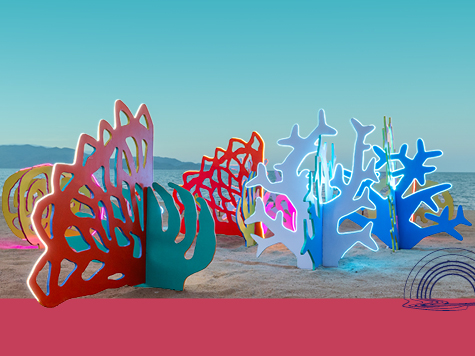
Entries are now open for Strand Ephemera 2027
Artists are invited to submit concepts that will form the North’s premier pop-up public art festival. Spark imagination and wonder, with artworks that celebrate Queensland’s unique stories – creating connection and lasting inspiration. Entries close: 10am, Tuesday 3 November 2026.
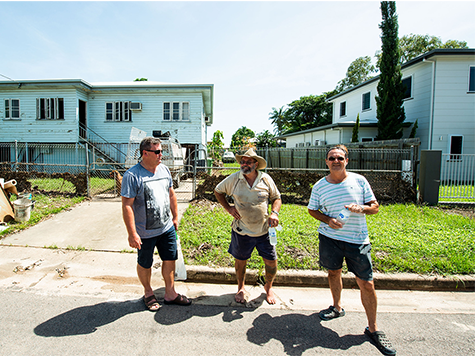
Recovery Roadshow
Council is taking recovery support on the road, with a series of community events planned across some of our region’s more remote communities. Connected communities recover better - let’s do it together.
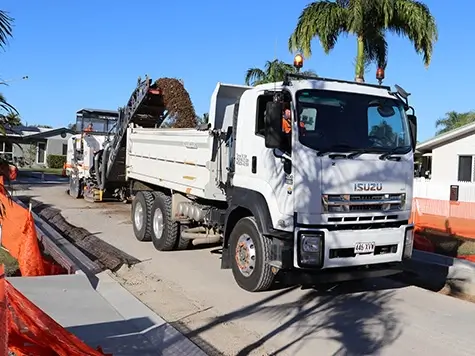
Capital Works Program
To keep Townsville growing, Council is actively involved in the delivery of projects to provide vital infrastructure and exciting development opportunities.
Community Sentiment Survey
Council’s Community Sentiment Survey is a city-wide survey that gives community members the opportunity to tell Council what is working well, what needs improvement and what matters most to them. The survey closes 30 October 2026.